Client Alerts & Insights
Benesch COVID-19 Resource Center: Employers Can Temporarily Use an Expired Driver’s License to Verify Identity on Form I-9
May 5, 2020
Due to the COVID-19 crisis, many states have closed their license bureaus and people are experiencing challenges renewing their state issued driver’s licenses and identity cards ─ which most job applicants and employees use as the List B document establishing their identity on Form I-9. Section 2 of Form I-9, which employers must complete and sign within 3 business days of an employee’s first day of employment, requires employers to physically examine one unexpired List B document and to record the document’s expiration date. The Department of Homeland Security (DHS) has temporarily changed this policy as highlighted below:
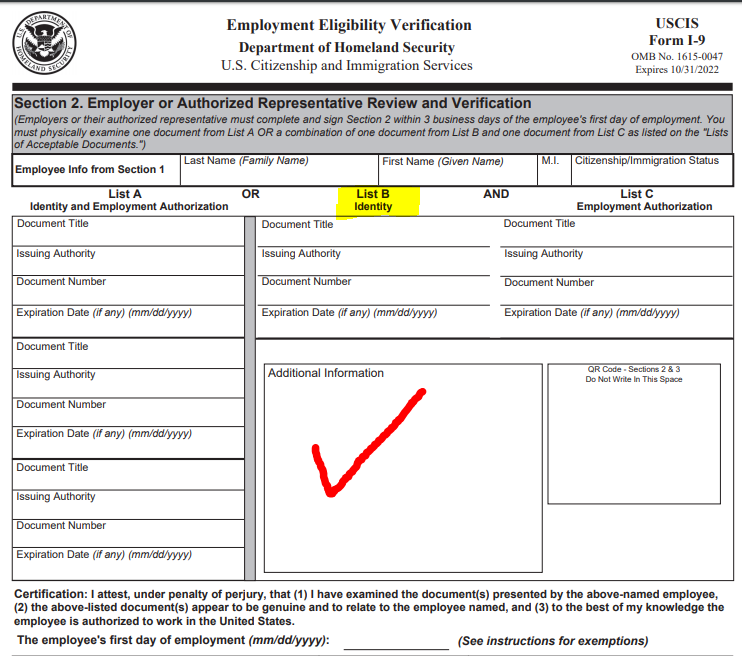
Retroactive to May 1, 2020, List B documents expiring on or after March 1, and not otherwise extended by their issuing authority, can be accepted by employers as if the documents were unexpired and also can be used to create an E-Verify case. Employers should record the expired document’s information in Section 2 and enter the word “COVID-19” in the Additional Information field. Employees will be required to present a valid and unexpired replacement document within 90 days after DHS ends this temporary reprieve. Employers should then record the new document’s information in the Additional Information field ─ and initial and date the change.
If an issuing authority has extended the validity of a List B document, such as a U.S. Military card, employers should enter the document’s expiration date in Section 2 and enter “COVID-19 EXT” in the Additional Information field. Employees with extended documents are not required to subsequently present a valid unexpired List B document. Employers can choose to document automatic extensions by attaching copies of the issuing authority’s web-page or electronic notice.
Remember that “green-cards,” or permanent resident alien cards, are List A documents that establish both identity and authorization to work, and should not be re-verified merely because they have expired. When verifying employment, be sure to use the most recent Form I-9, which is copied above, and has the edition date 10/21/2019 on the bottom of the page.
For more information, please contact a member of Benesch’s Labor & Employment Practice Group.
Margarita S. Krncevic at mkrncevic@beneschlaw.com or 216.363.6285.
Alan Rothenbuecher at arothenbuecher@beneschlaw.com or 216.363.4436.
***
Please note that this information is current as of the date of this Client Alert, based on the available data. However, because COVID-19’s status and updates related to the same are ongoing, we recommend real-time review of guidance distributed by the CDC and local officials.